Per Tengstrand was born in 1968 in Växjö, Sweden. He started playing the piano at the age of 6 with his mother as a teacher. At age 16, he went to the Malmö Conservatory of music and later the Conservatory of Paris, where the audience broke the 300-year ban to applaud at the graduation competition after his performance.
He was a prize-winner in international competitions in Paris, Brussels and Geneva, and after winning first prize in Cleveland’s International Piano Competition, he debuted at the Lincoln Center in New York in 1997. After that he has performed in venues such as the Kennedy Center, Weill Hall in Carnegie Hall, Musikverein, Gewandhaus in Leipzig, and Suntory Hall in Tokyo
He has performed as soloist with Detroit Symphony, National Symphony, Japan Philharmonic, Osaka Philharmonic, The Hague Resident Orchestra, Orchestra de la Suisse Romande, Singapore Symphony, the Nationals Symphony of Taiwan and Orchestre National de France.
Mr. Tengstrand’s career highlights include performing the Tchaikovsky Concerto in Suntory Hall with Japan Philharmonic, Beethoven’s Concerto No. 5 during Neeme Järvi’s final subscription concerts with the New Jersey Philharmonic; performances with the National Symphony Orchestra at Wolf Trap; the Residentie Orkest in den Haag, under Neeme Järvi; the Royal Philharmonic in Stockholm, under Leonard Slatkin, and Stenhammar’s first PIano Concerto with Tonkünstler Orchestra Orchestra in Vienna’s Musikverein and Leipzig’s Gewandhaus under the baton of Kristjan Jarvi.
Per Tengstrand gave the last concert in the governor’s palace in Hong Kong under British rule, with Chris Patten and Margaret Thatcher in the audience. Together with the Deputy Secretary General of the UN, Jan Eliasson, he made a performance of music and talk in the UN headquarters in New York.
Per Tengstrand is an artistic director of the Princeton Chamber Series, the Beethoven Festival in Lund, Sweden, the Beethovensafari in Helsingborg, Sweden and he has a festival in his name in his birth town of Växjö. He is the recipient of the Royal Medal of Litterus and Artibus, which he received from the King of Sweden.
Building relationships with audiences and creating something, whether it’s a film, a festival or a concert serie, is a passion for me. Here are the current different music events I am the founder and director of.
Traveling can be fun and an adventure, but when you have done it for as many years as I have, and the travel means performing and being under pressure (which makes it difficult to enjoy the places you are visiting), it is certainly nice to have the concert venue an eight minute drive from your home.
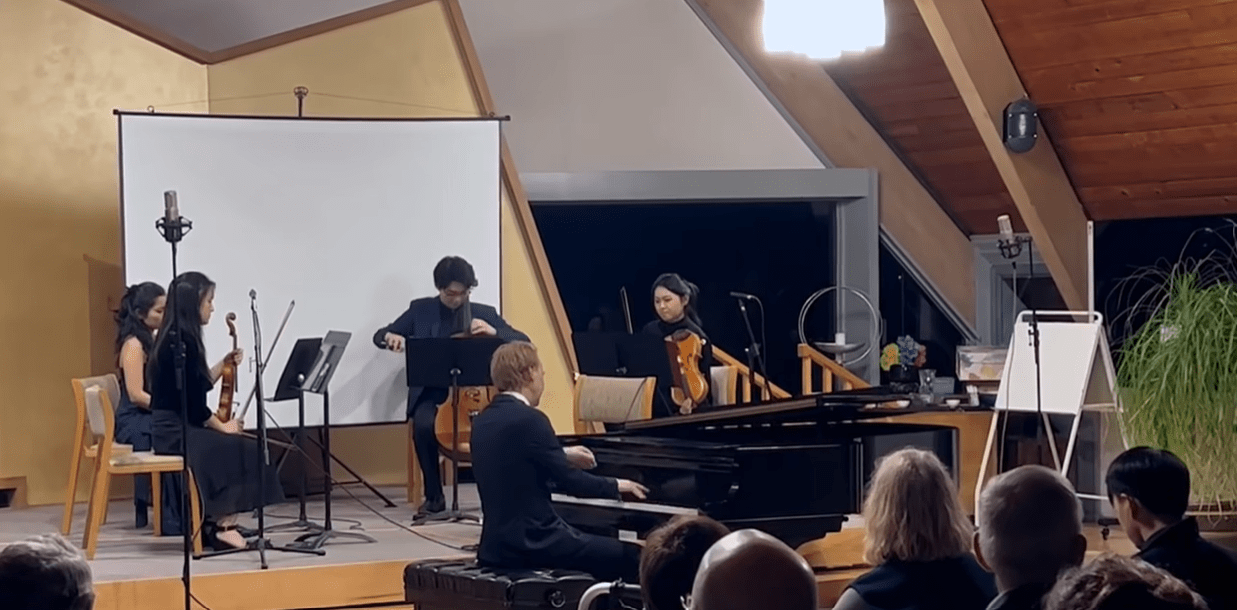
The incredibly beautiful Channing Hall at Princeton Unitarian Church, with its phenomenal accoustics, is the home of Princeton Chamber Music Series, which has been a real success story in its first season. So many people want to come that I have added a 4pm concert.
Right now, we are heading towards the season finale, and I am already planning for next season, incredibly encouraged and energized by all the wonderful folks who came to the concerts so far.
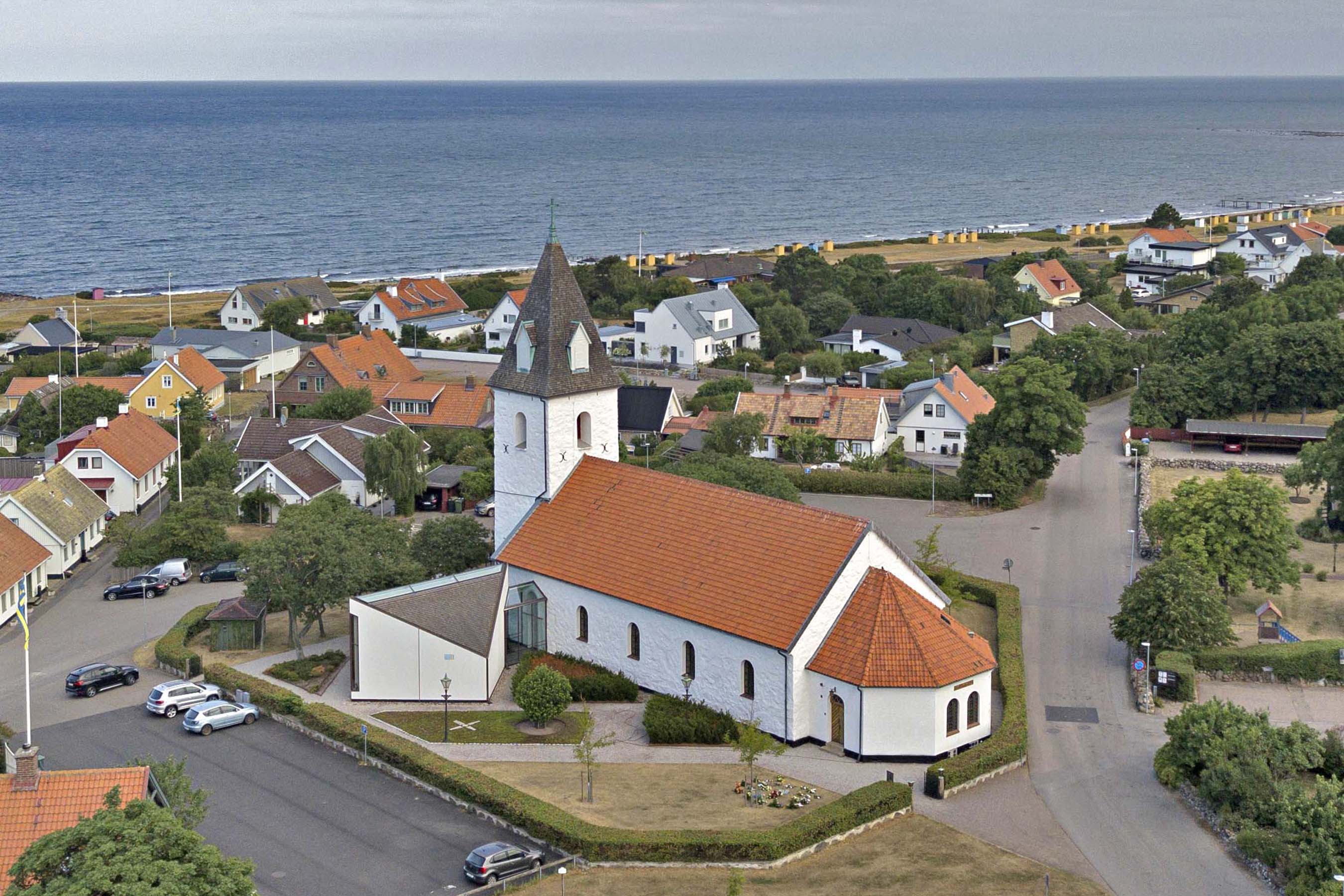
In beautiful Skåne, Sweden, there are two festivals dedicated to Ludwig van Beethoven. The name Beethovensafari is something I came up with now seven summers ago, and it is now one of the main classical events in the Helsingborg region. Five concerts in five different places in summer, most of them outside the city in incredible settings, like Vikens Kyrka:
Lunds Beethovenfestival started in 2023 and had its second opus in 2024, when I managed to get funding to invite two fantastic artists from the US, Katie Liu and Robin Park, who you can hear in the video below from the festival.
I have always been fascinated by films, something I probably share with just about the whole population of the world. But I have also been drawn to the likeness of how a film is made with how music is made. A story including different characters with beauty, tempo and timing. A psychological narrative where there is the expected but perhaps more importantly, the unexpected.
Quoting oneself is terrible, I know, But to take a phrase from my first “real” documentary “Beethoven – Freedom of the Will”, “Since I was six years old, I have been telling stories with my hands touching the keys of the piano. I will never stop doing that. But as the world shut down, I found a new way to tell stories”
FILMS
Beethoven – Freedom of the Will
Directed by Per Tengstrand Filming: Per Tengstrand, Björn Skallström, Aleksandra Sende Filming & sound Kreutzer Sonata: Per Tengstrand Lighting Kreutzer Sonata: Stefan Bensaid & Per Tengstrand
No human being is perfect – an attempt to idealize a person will always land in half-truths. But music can inspire and empower, and no music has done so more than the music composed by Ludwig van Beethoven. This film takes us through historical moments and portraits people who have been touched by the timeless power of Beethoven’s music.
Ever since I played ”Fur Elise” when I was six years old. the music of Beethoven has been a part of my life. For the past twenty years, I have performed cycles of all the piano sonatas and piano concertos. I will never forget the letter I got after playing a concert which included the dramatic ”Appassionata”.
In the audience was a man whose wife had recently passed away, and he obviously had a hard time recovering from that. He received a ticket to my concert as a gift from friends: he went to the concert, albeit reluctantly. After the recital, he wrote to me. He said that when he had listened to Beethoven’s music, it made him want to come back to life, it gave him strength and hope in a way that nothing else had managed to do.
Although that story is not in the film, it symbolizes the heart of it. How music, in this case Beethoven’s music, can give us an inner strength that perhaps we didn’t know we had. I could make a film about research that shows how music affects the brain’s limbic system, the system that handles emotions and memories. But that’s not this movie.
I want to tell the story through music, and through people.
Piano Rivals
(In progress, premiere October 2024
Piano Rivals is the working title of a documentary about the two leading pianists and piano composers in Europe during the romantic era, Frédéric Chopin and Franz Liszt. It is the second part of a planned trilogy with focus on classical music and how it connects with history and people. The first was “Beethoven – Freedom of the Will” which received prizes at film festivals in Japan, Singapore and Sweden.
Piano Rivals will tell the story of two composers from small countries in the middle of Europe, squeezed between much more powerful countries and their interests. Neither Poland nor Hungary existed as independent nations, ruled by Russia and the Habsburg monarchy respectively. Both Chopin and Liszt associated strongly with their nations . Born only a year apart, both composers became symbols for their countries and their fight for independence. This lives on until this day. In the world, only two airports situated in a capital bear the name of a composer: Ferenc Liszt airport in Budapest, and Chopin Airport in Warsaw.
The film will be filled with music, of course. The music is the main reason these composers touched and inspired people, and the music performed will show this. As is the case in “Beethoven – Freedom of the Will”, whole movements will be performed, performed especially for the film. This is something rather unique: usually only fragments of works are heard in documentaries.
Other parts will be about historical events that make the viewers understand and feel the connection between music and history, between music and people and their lives. Three geographical places will be the main focus: Paris, Warsaw and Budapest. Paris was the place where both composers lived at the same time, and it was the home of Chopin for most of his adult life. Warsaw and Budapest are, of course, the capitals of the native countries of the composers.
As the working title alludes, these were two very different men on a personal level. Liszt was perhaps the first real international star in history, creating mass hysteria which even had a name, “Lisztomania”. Chopin refused to play in public, and only performed in salon settings with friends. Liszt lived a long life, Chopin died young. Liszt was greeted as a national hero in Budapest, being carried through the streets on the shoulders of his supporters, Chopin was never able to return to Poland. Liszt used his fame and fortune to help young and unknown composers and raised enormous amounts of money to charity, Chopin was constantly struggling to make ends meet. There was no open animosity between the men, but while Liszt admired Chopin, Chopin could be quite resentful of Liszt, and what he thought was mannerisms and bad taste.
my trip to Europe this time is nearing its end, and since I have been away from home for quite a while it sure will be nice to sleep in my own bed in just a few days. Of course, traveling and playing is exciting in many ways, but the rootlessness that comes with long travels can be tough to get through.
The last stop on this trip is Leipzig, Germany. This is the city of Bach, Goethe, Mendelssohn, Mahler and many more. It was also, of course, bombed by the allies during the war and part of the GDR during the cold war. Lots of history in these streets.
Actually, yesterday I had an experience that somehow felt like a survival of the GDR era … I had been told that there was wireless internet that I could use in the canteen of the Gewandhaus, by getting a paper with login and password. Alright, good. I ask about this in the canteen, and they tell me to go down to the reception by the staff entrance. Alright, I walk down the stairs to this place. There are two women, one of them is very friendly and immediately wants to give me the password paper but she is stopped abruptly by the second woman, who interrupts her and explains to me that I must go to “office number 309” and speak with “Herr Lehman” for this internet password paper.
A little puzzled that it is such a big drama to receive a password to their internet I walk back upstairs; after two flights of stairs I start looking for office number 309. The man I ask for directions says “but that paper you should get at the reception.” I told him that they did not want to give it to me without Mr. Lehman’s permission. He sighs, calls the front desk and says “there is a gentleman coming to you that must have an internet password”. Good.
When I come down, I get the coveted piece of paper with login and password, wohoo!. But… only if I write down my name, full address and my phone number. A bit strange, no?
Day 2:
Now it’s Saturday and I’ve had two of my three concerts in Leipzig, it’s like I am having an Artist in Residence with the orchestra, which is great. The first concert I played with the orchestra was in a so-called “Black Box” where we performed a piano concerto by fellow Swede Karl McFaul, the concerto is called the “Drum and Bass Concerto” because it contains digital drum loops which Karl himself controls from a keyboard. It is really cool, actually. In the midst of one of the most frenetic passages, something very unscripted happens: the lamp for my score, attached to the music rest, falls down into the Steinway: BOOM! To my own surprise, I just keep playing, with half a lamp hanging over your hands. It was kind of “the show must go on”-moment. This is recorded on video, so I want to get hold of it and be able to show you, it looks very funny.
Here is me and the composer McFaul listening to the sound in the control room of the radio station:
The second concert was a piano recital with two Beethoven sonatas and some Lyric Pieces by Grieg. Grieg lived in Leipzig during a large part of his live, did you know that? It is incredible when you start to discover the cultural history of this city: Bach, Goethe, Mendelssohn, Mahler, Robert and Clara Schumann, Grieg and many more. Amazing.
Now I am waiting for the evening to come so that I can fall asleep, wake up early and play Wilhelm Stenhammar’s gigantic piano concerto in front of 2,000 people in a sold-out Gewandhaus … At 11 o’clock in the morning.
Gewandhaus, Leipzig
Day 3:
The day started early with breakfast at 6:30, then a morning walk after which I went to the concert hall and practiced a little, it felt great. Then time was flying, and before I had time to say “Stenhammar”, it was quarter past eleven and I was waiting behind the stage to go on stage for the first time in the famous Gewandhaus, a little nervous after all. But once you get started and begin playing the tension is gone and it was lots of fun.







 Per Tengstrand